Time for Tae
Elder Auntie. little sister.
All Images shot on Canon 5D Mark IV | 24-70mm + 70-200mm
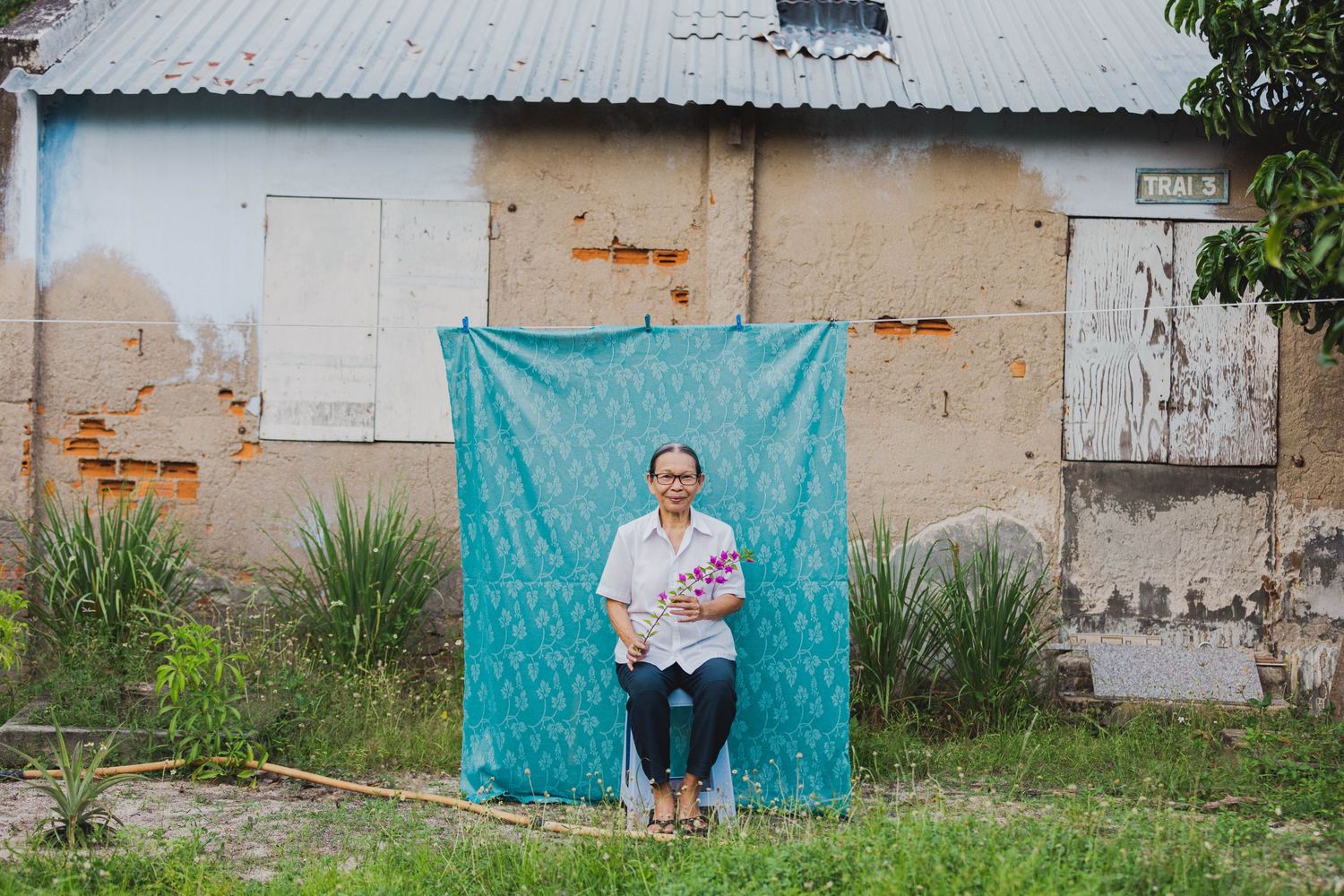
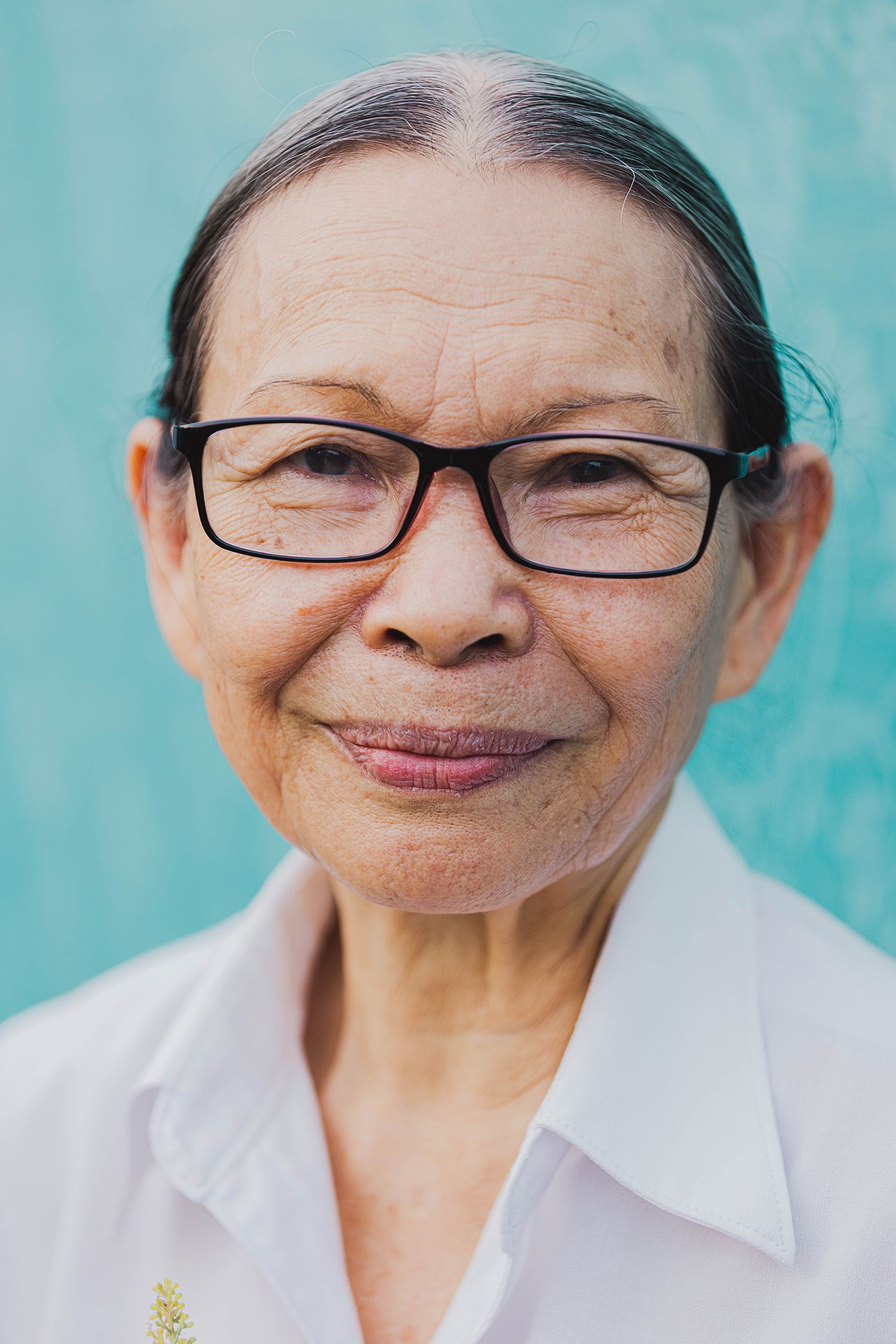
Auntie Tae opened the door for my arrival. A warm welcome accompanied by sniff kisses and the scent of citronella to keep the mosquitoes at bay. Her light shines brighter than the altar of white Jesus in the foyer—the youngest of my grandmother's sisters, and even at 70 — still spritely.
I’m reminded of her youthful nature every time she zooms away on her moped to avoid the camera. On our scheduled shoot day, I played a two-hour-long game of hide-and-seek through the village to find her.
I tracked her down, alive in the community graveyard, giving flowers to ghosts at sunset. Maybe Spirit coaxed her to acquiesce to becoming a subject, because she finally allowed me 5 minutes to take her portrait with some fabric that she fancied that would one day become another áo dài -- and a flower that was standard in every portrait of a lady.
IT TAKES A VILLAGE
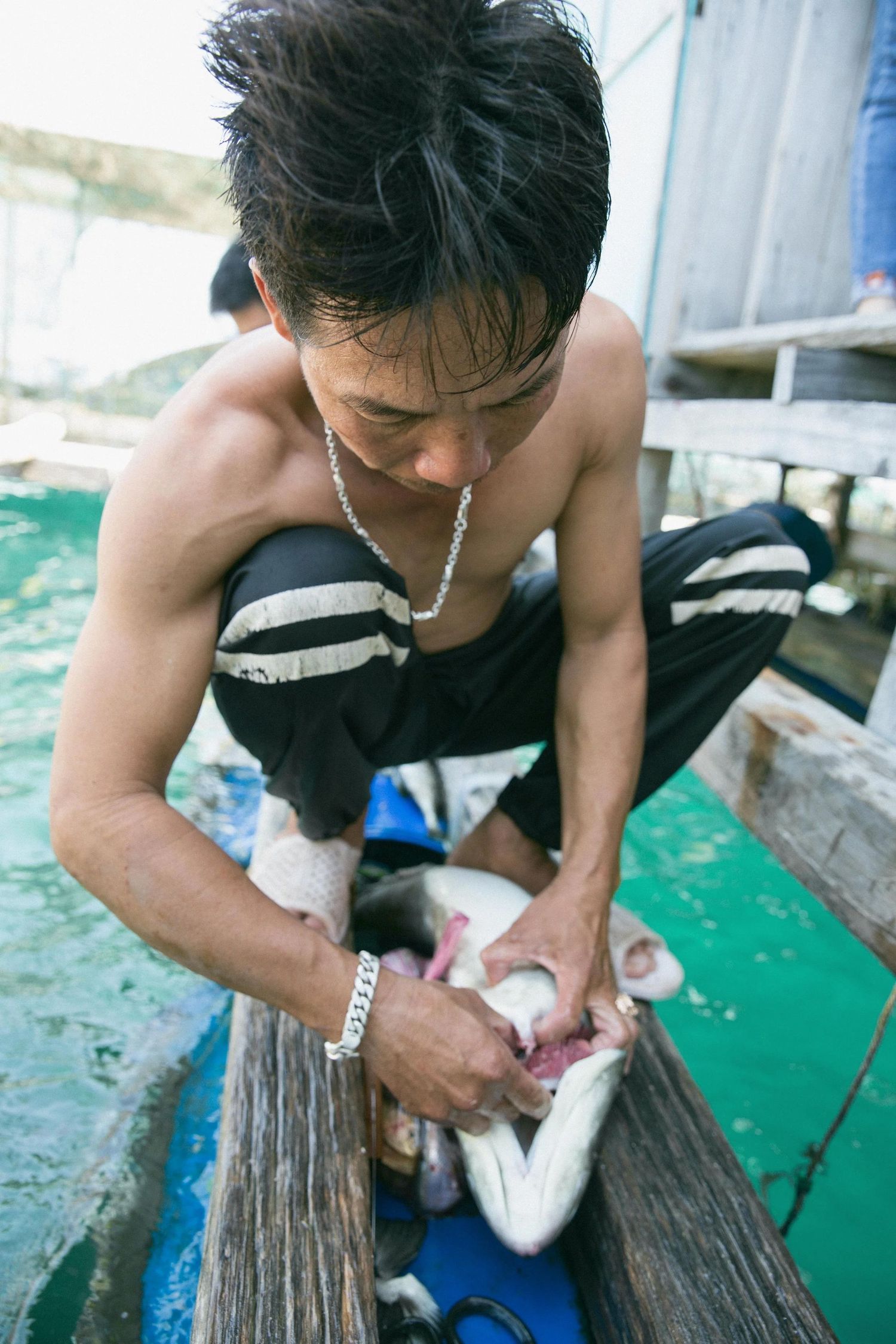
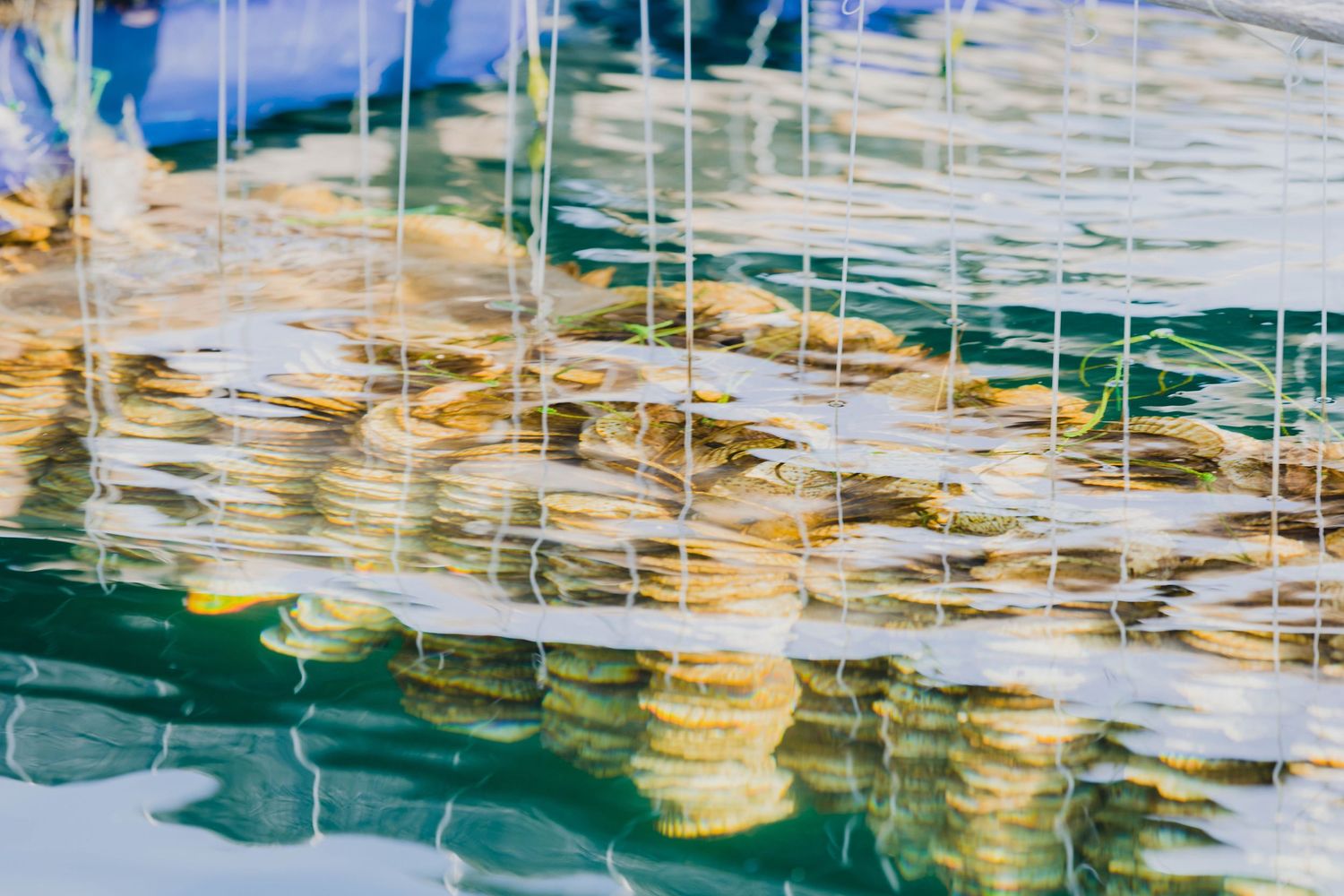
My family are considered "Boat People” of the Vietnam War. Forced to uproot and leave their seaside town of Cam Ranh Bay. The sea has been a source of survival for us. A turbulent route to freedom for some and a source of sustainability for others. The ones who stayed behind began a shrimp farm, and then my aunt Tae's home became a hostel for seasonal fishermen. During my last visit to Vietnam, I documented cousin Minh’s oyster farm. A small 8x8 wooden house that sits on the sea. Tiny shanties popped up everywhere as if propagated from the water. Anxious dogs balanced on beams, barking into the salty air. Some overwater shacks dangled electric wires dangerously close to the water’s edge. Evidence of careless fishermen and a community that had lost hope along the way.
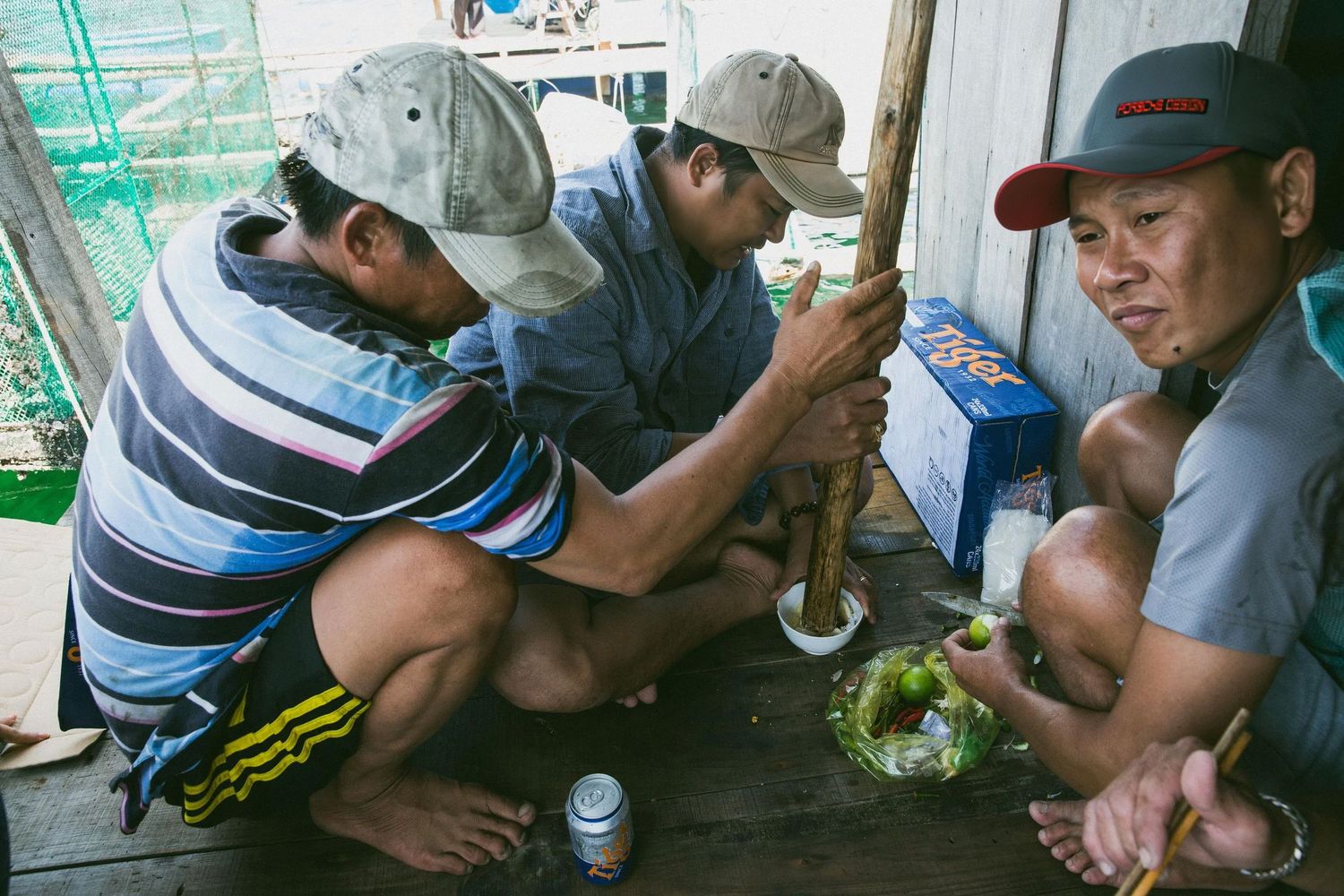
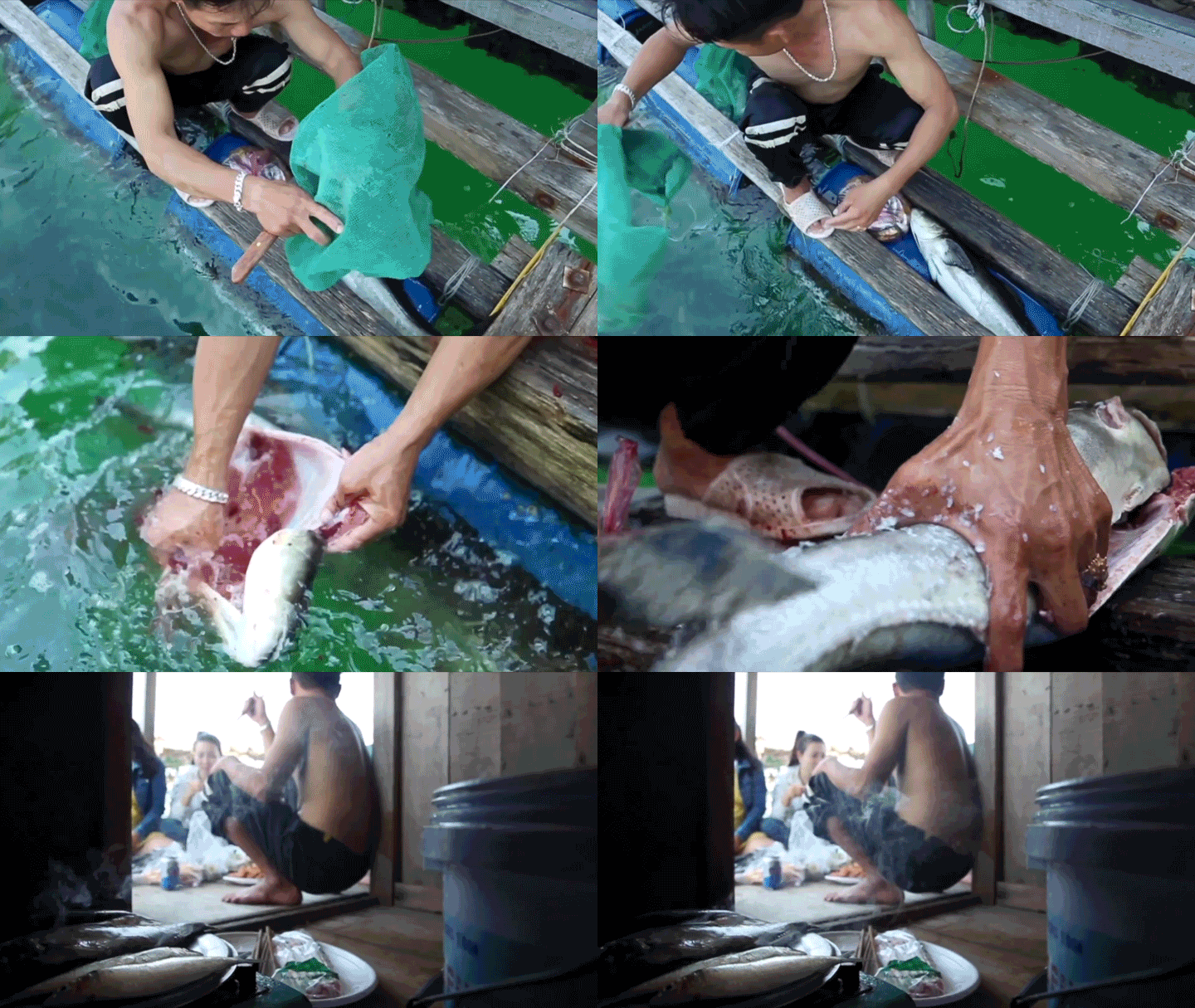
We finally arrived at cousin Minh’s. I learned how to string oyster shells and catch a fish with a simple line. We prepped lunch while sharing stories of the past. It takes a village to pour into the next generation. And with 12 people crowded in an 8x8, I’ve never felt closer to family.
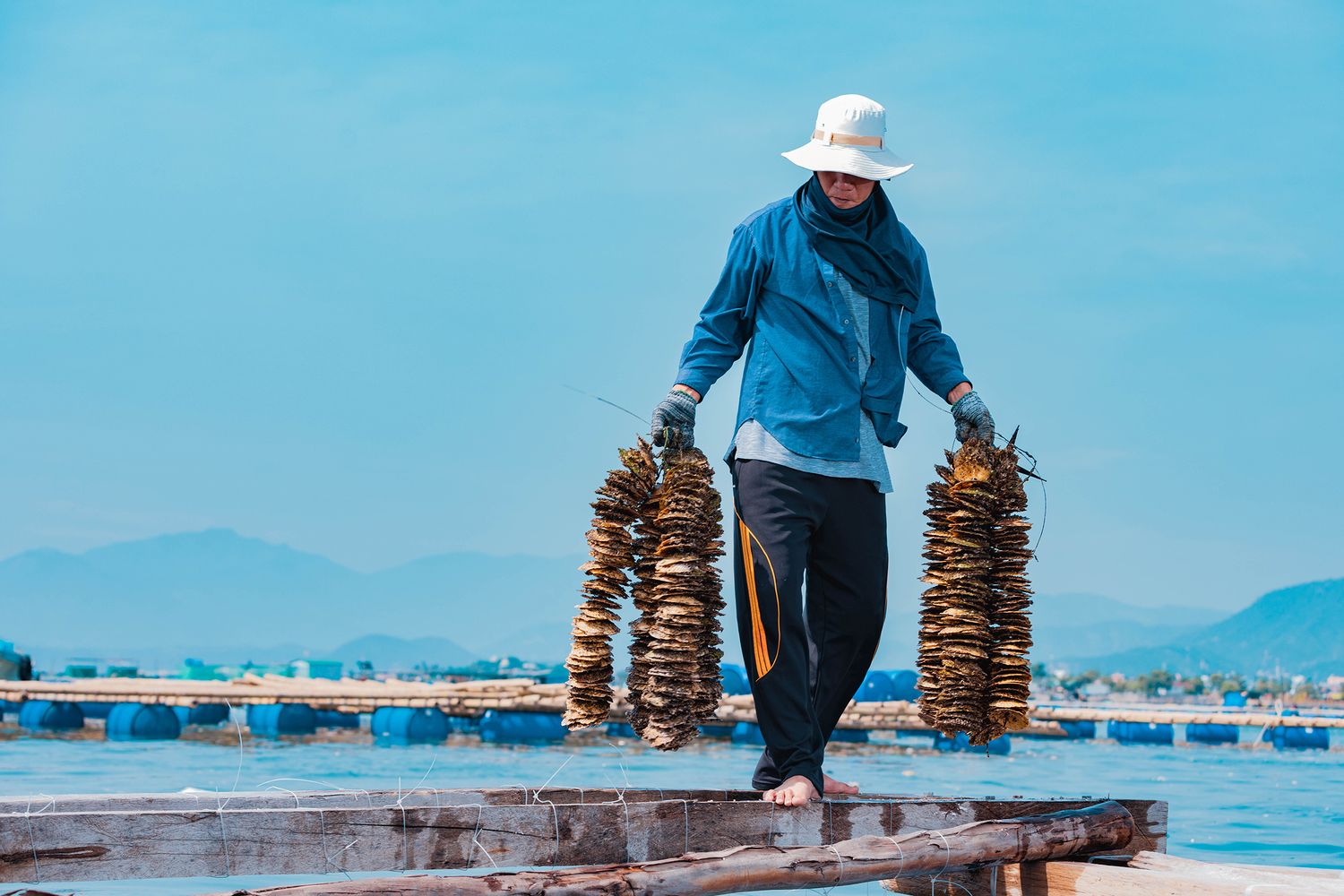
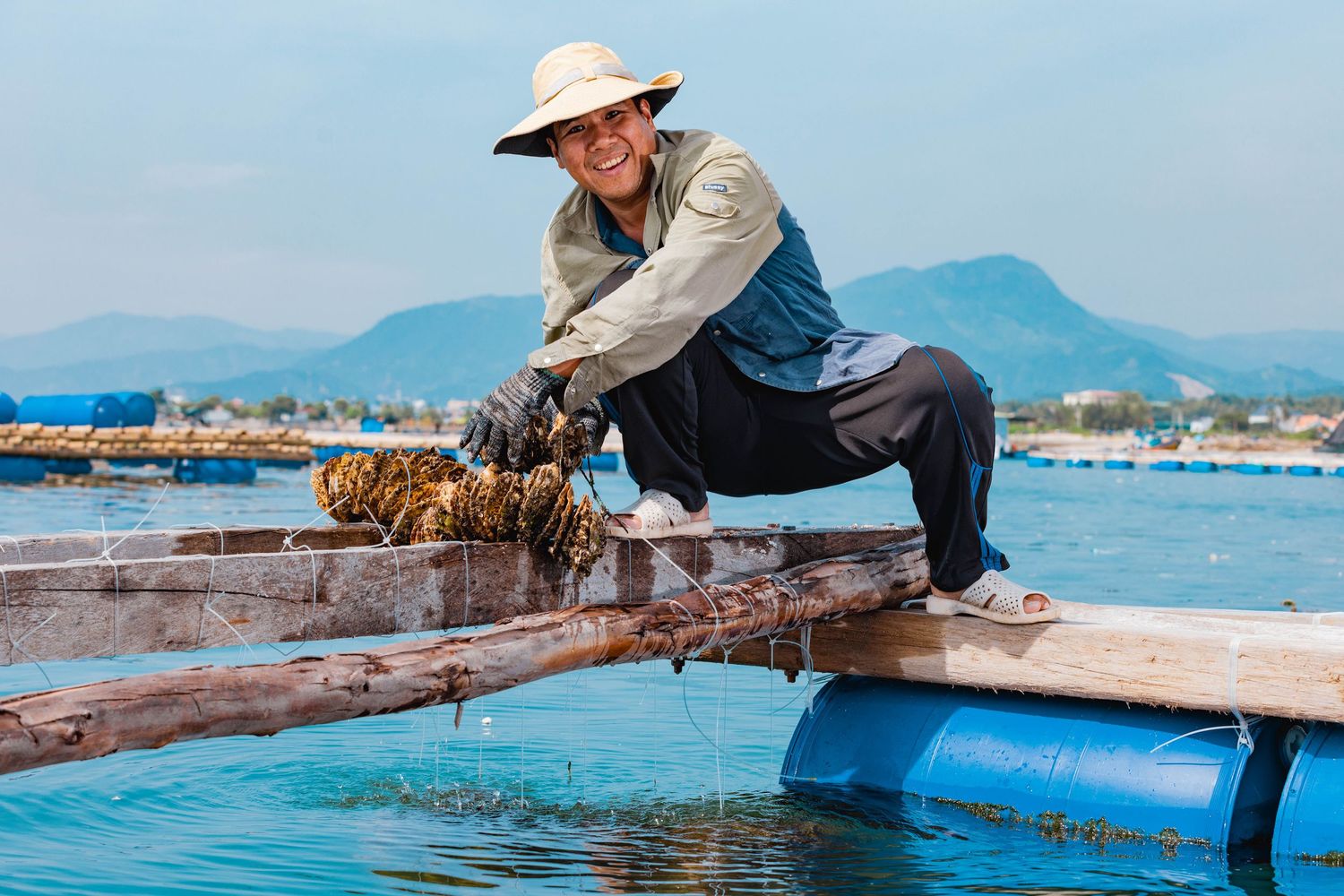
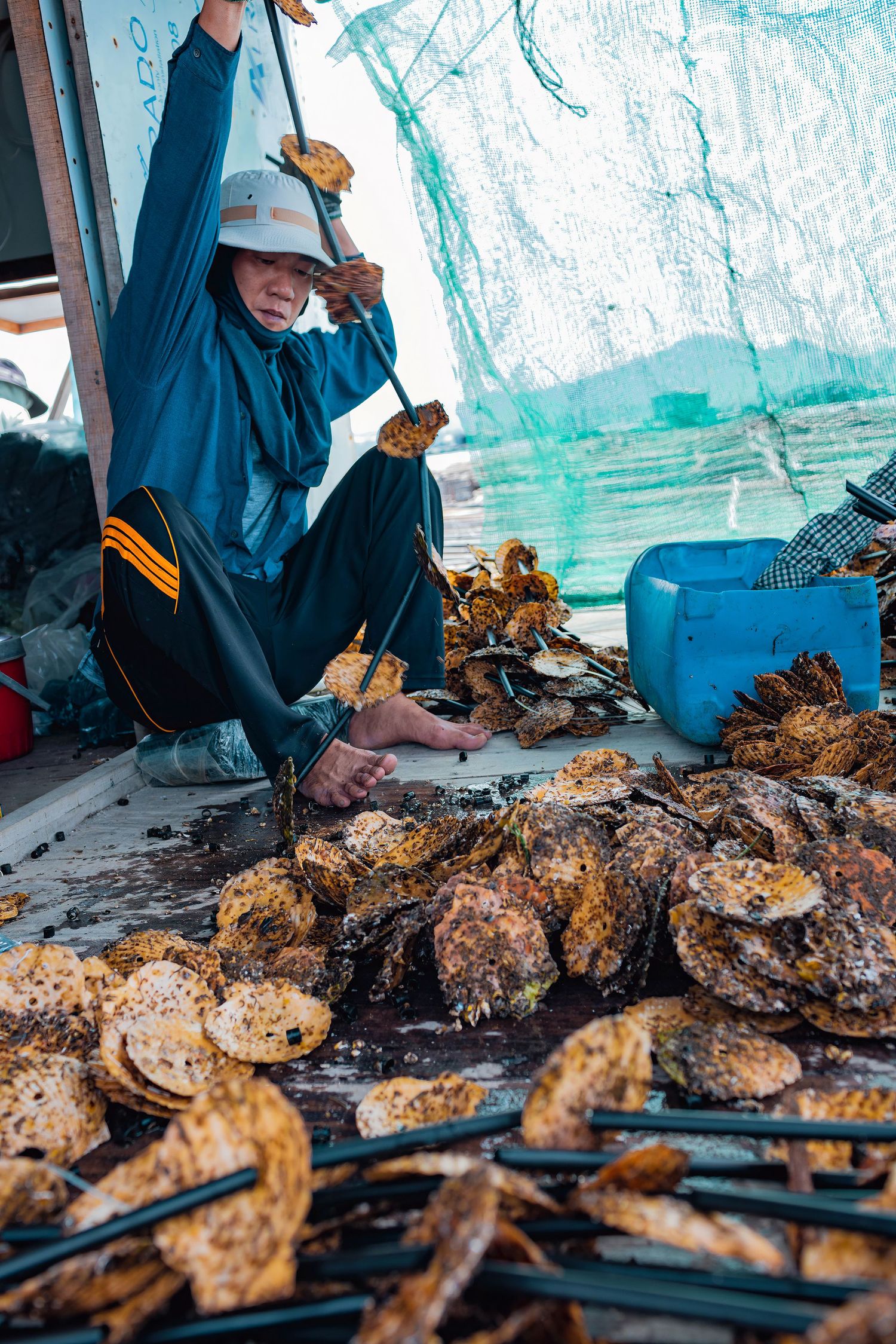
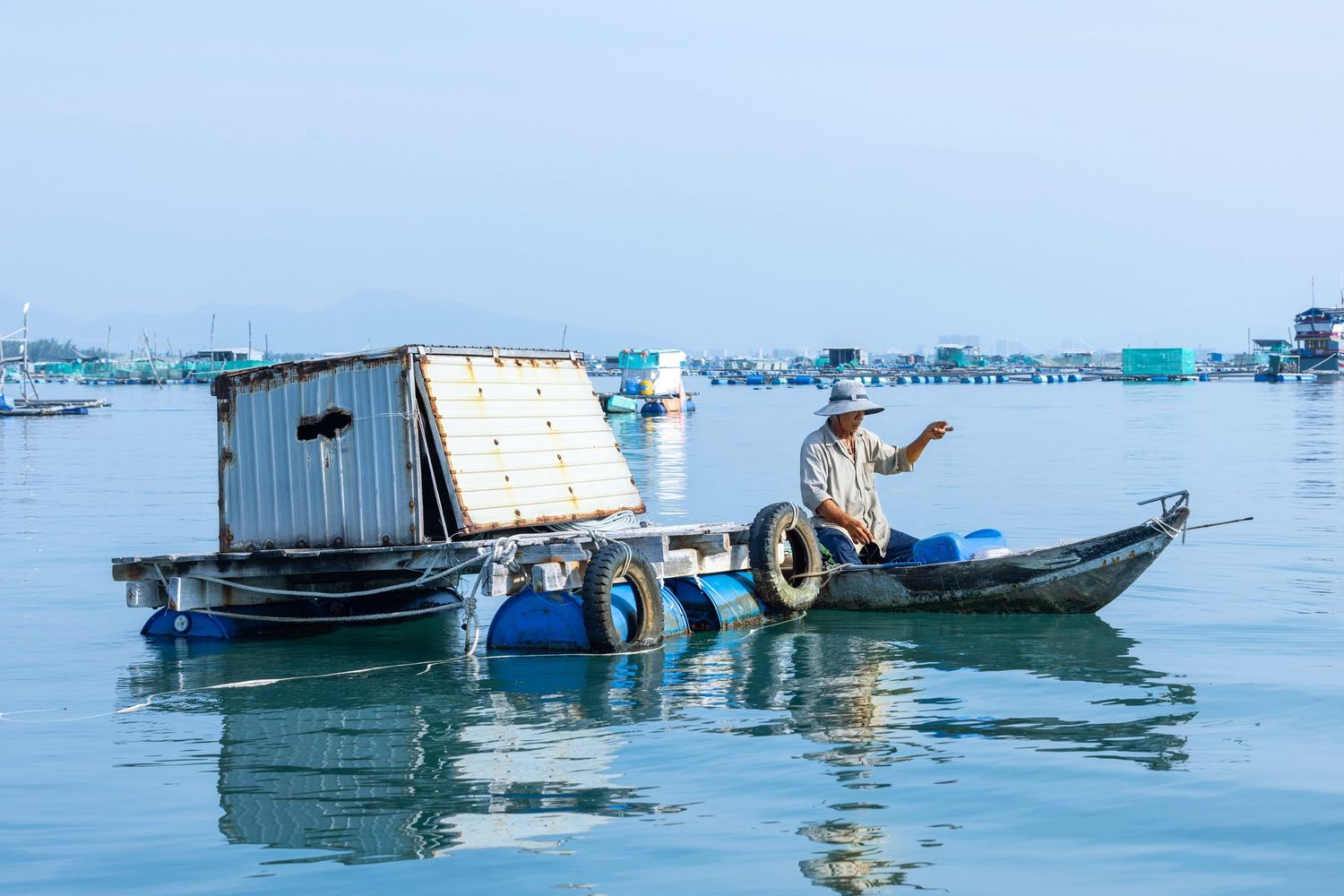
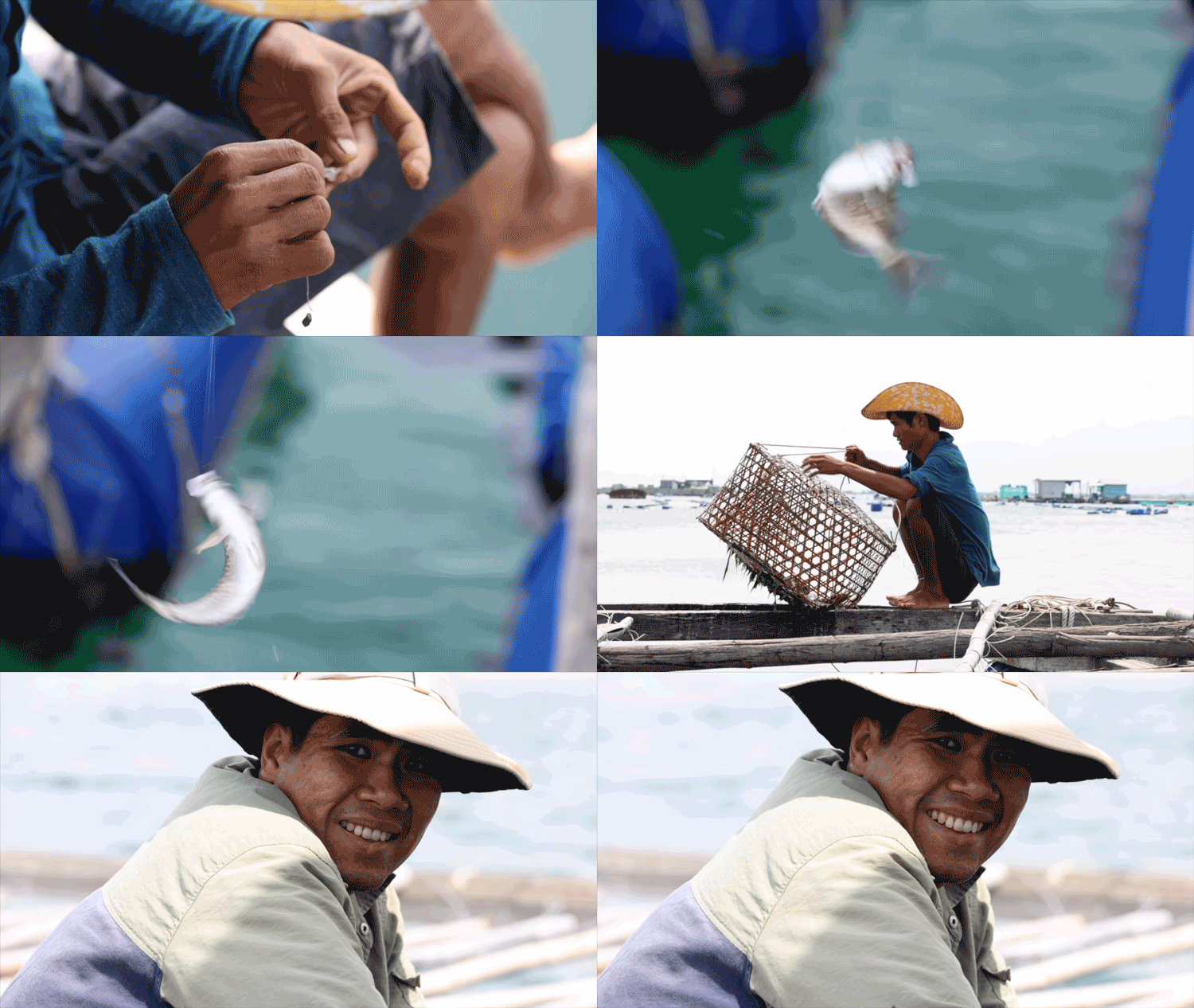
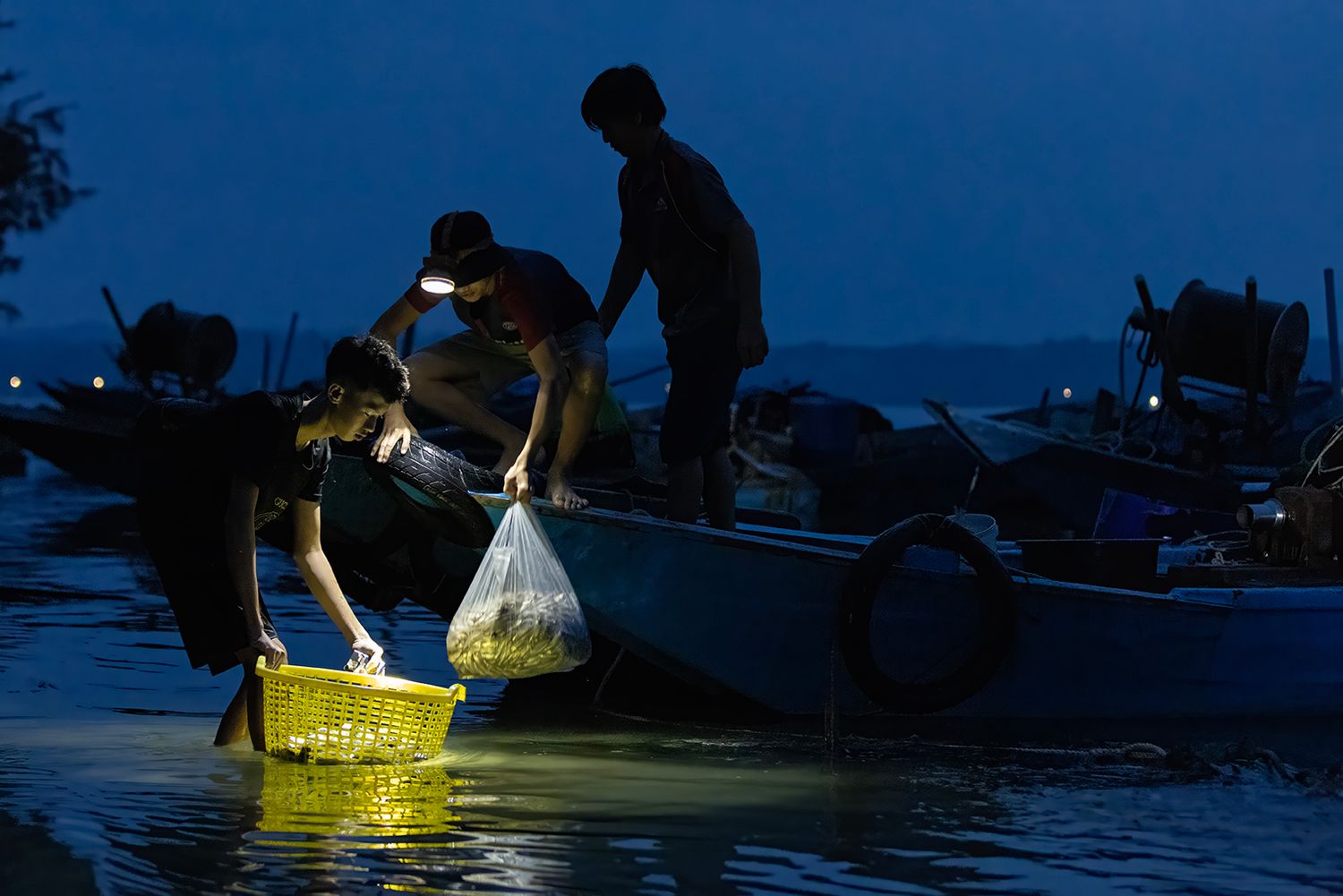
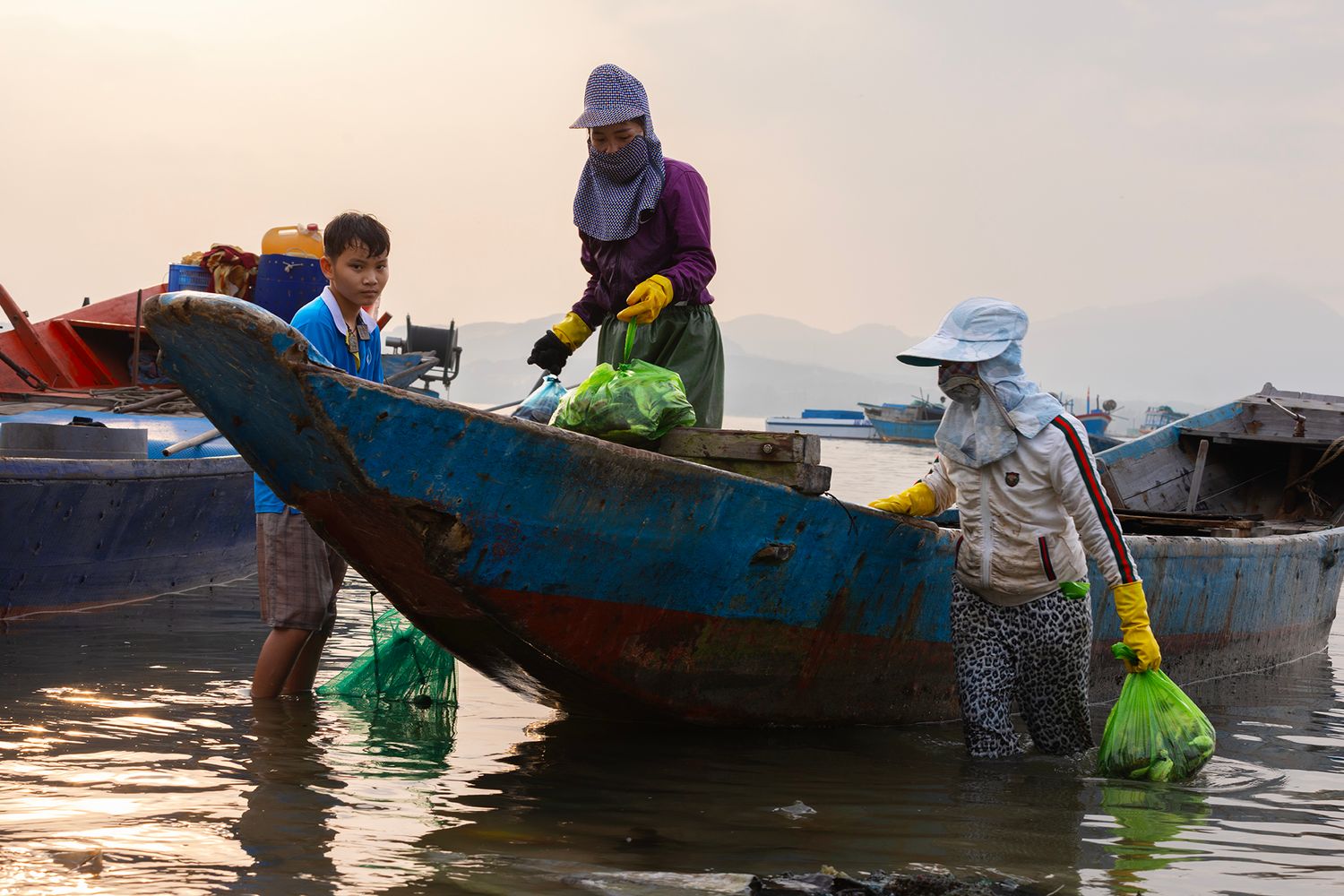
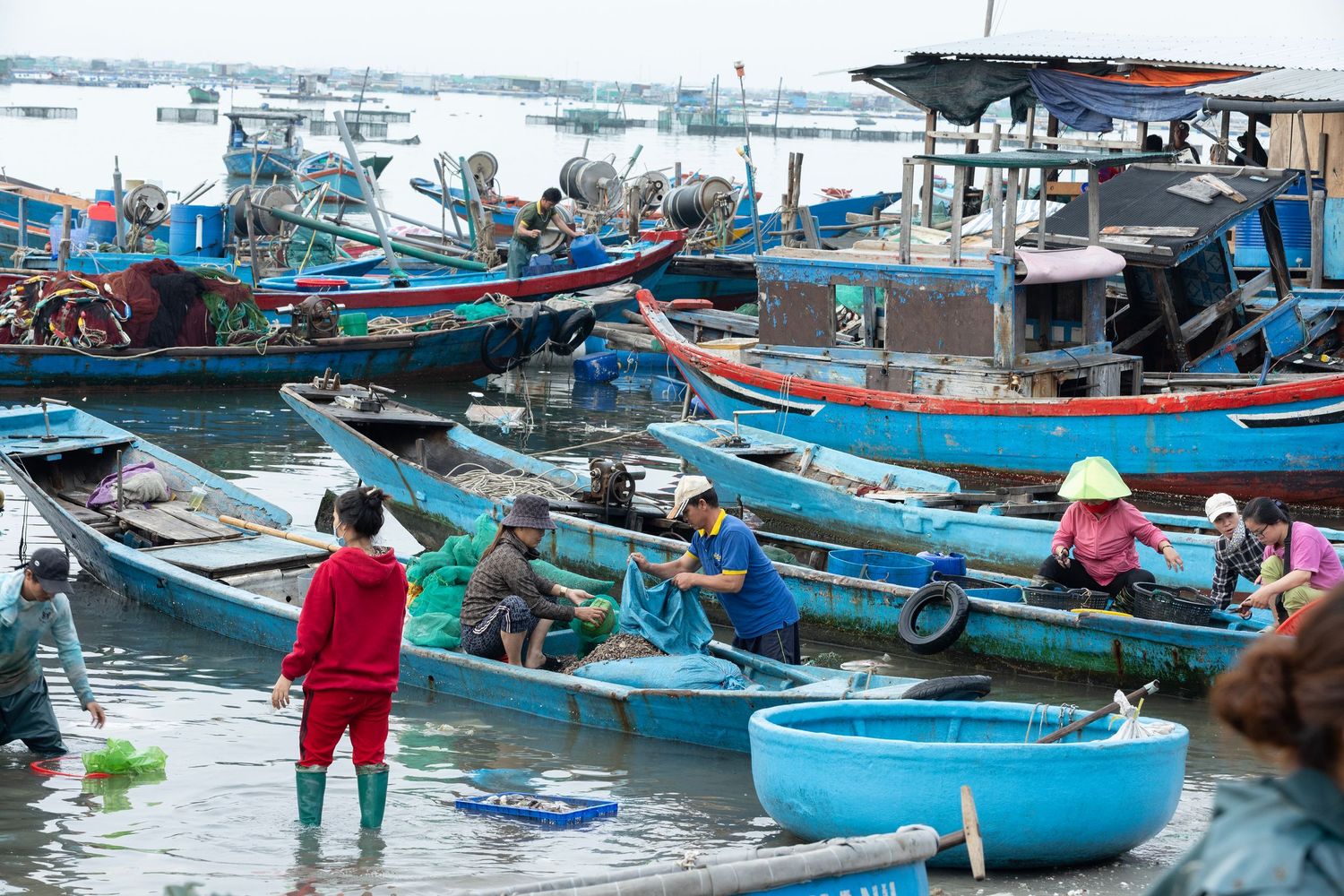
Cam Ranh Bay, Vietnam. Teenage boys bring in their weeks catch to sell to local vendors.
THE SUNRISE FISH MARKET
It was 3 am in Cam Ranh Bay, Vietnam.
The thick heat of October crept through the edges of my mosquito net. The moon waned through the window — shining a light above the chicken coop. The rooster on watch, not yet awake.
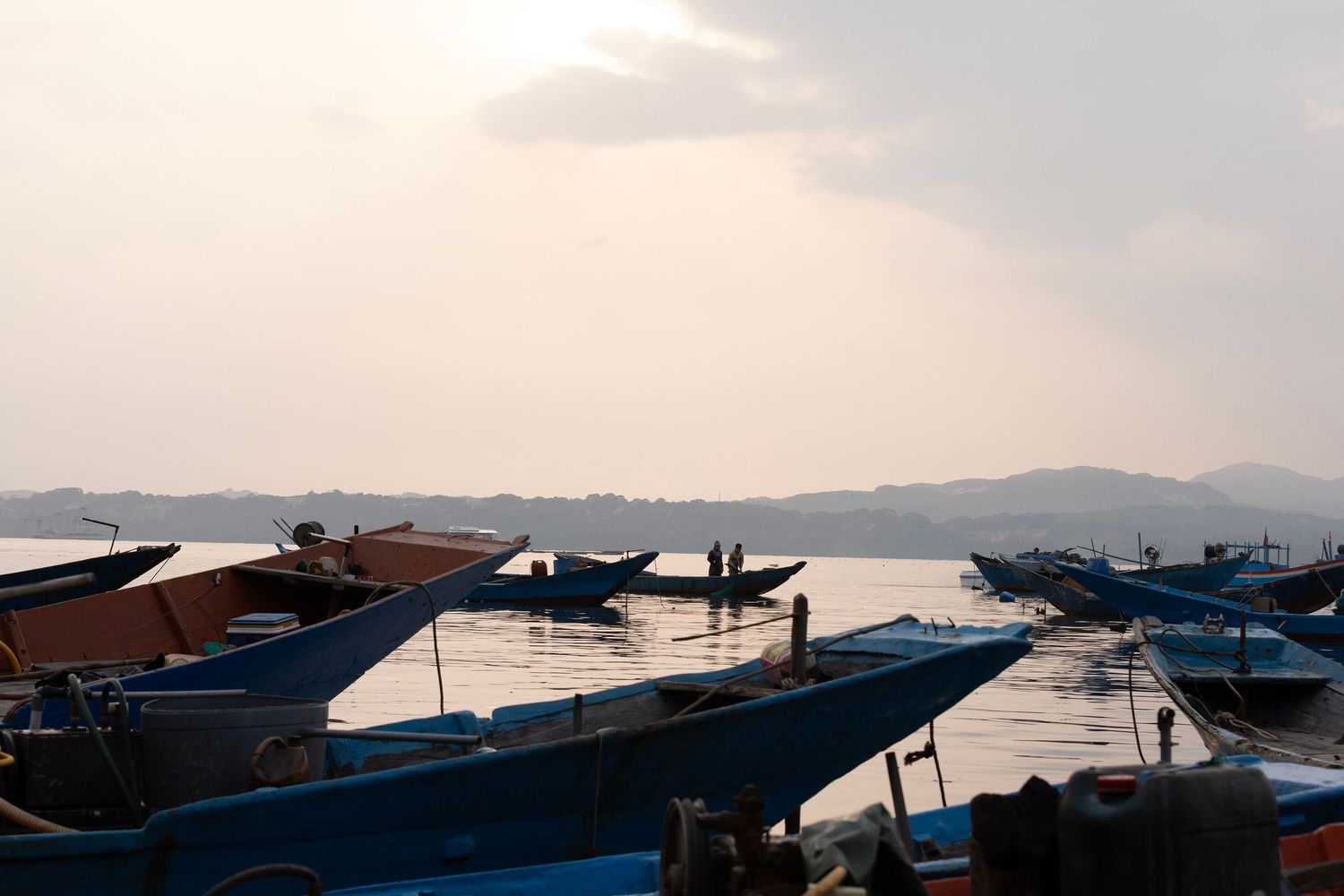
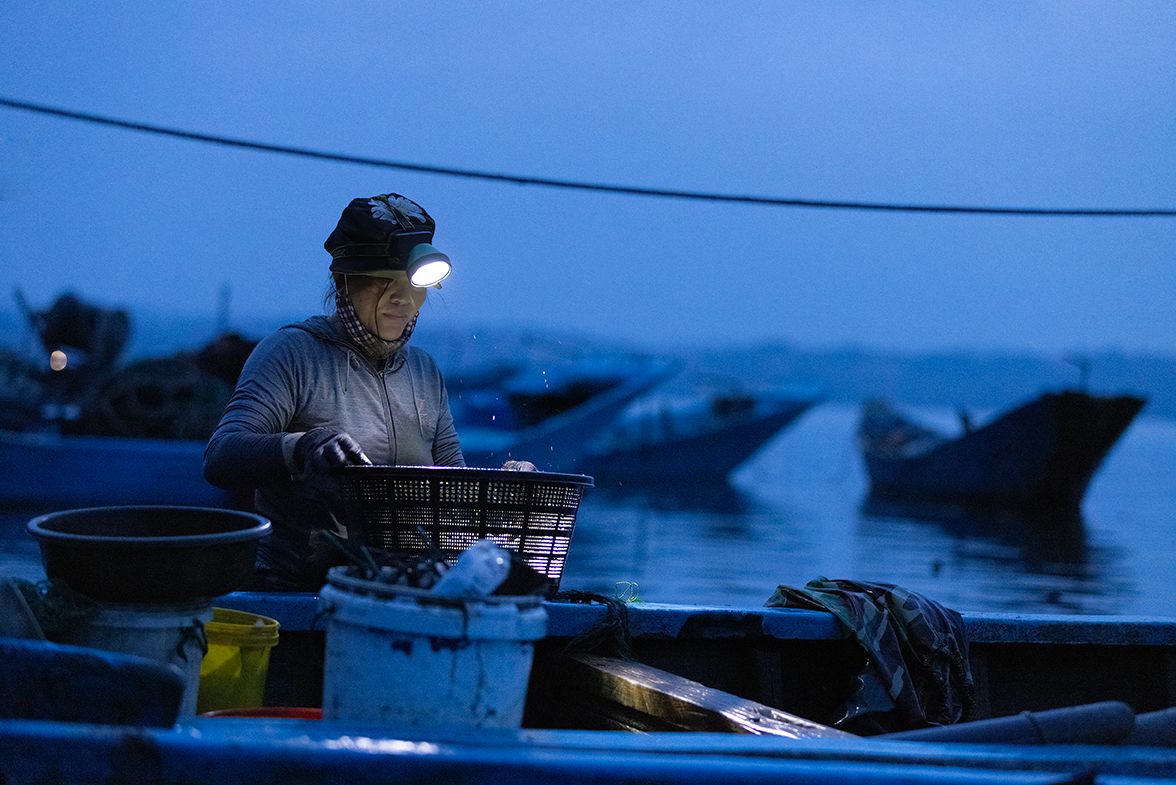
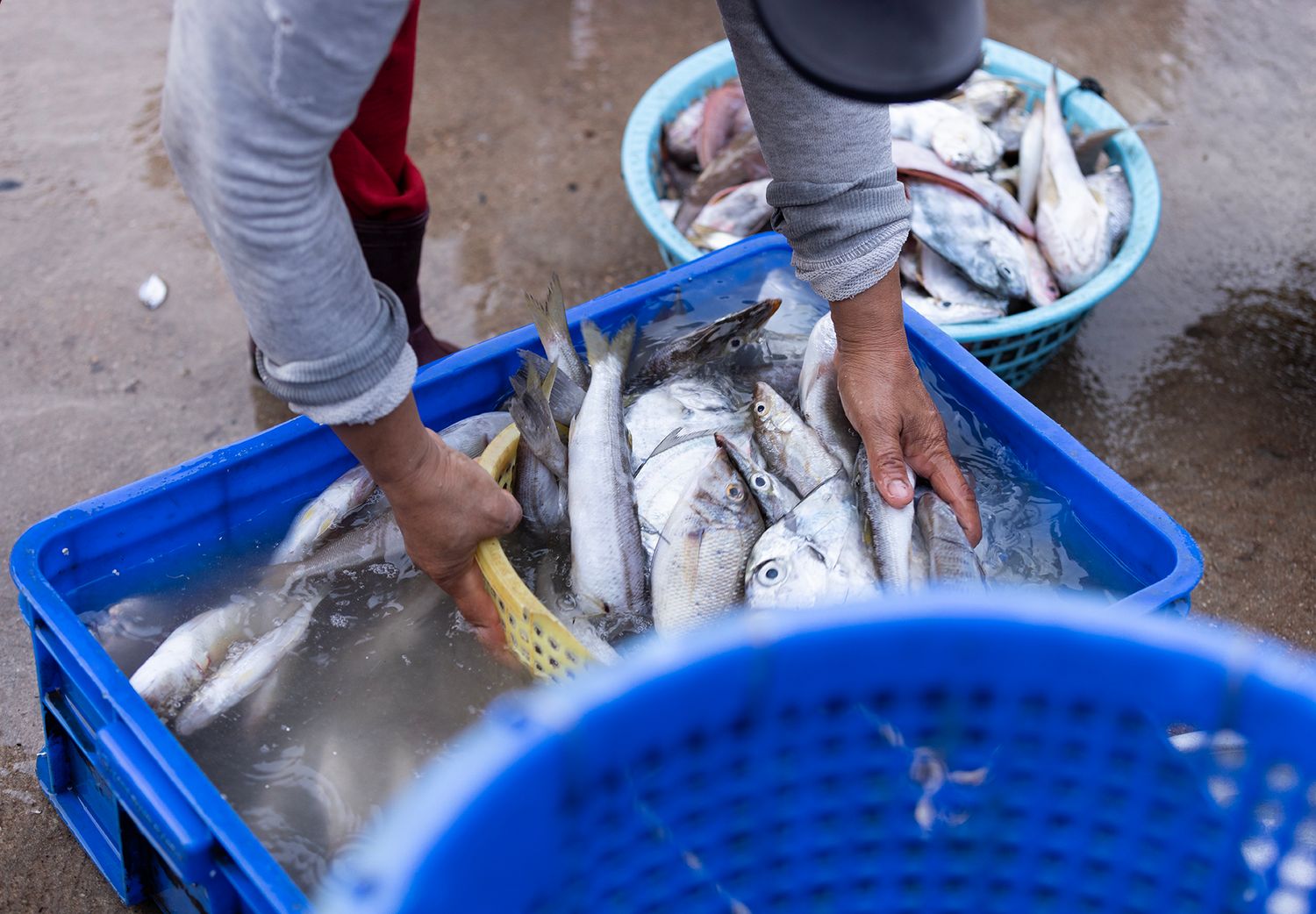
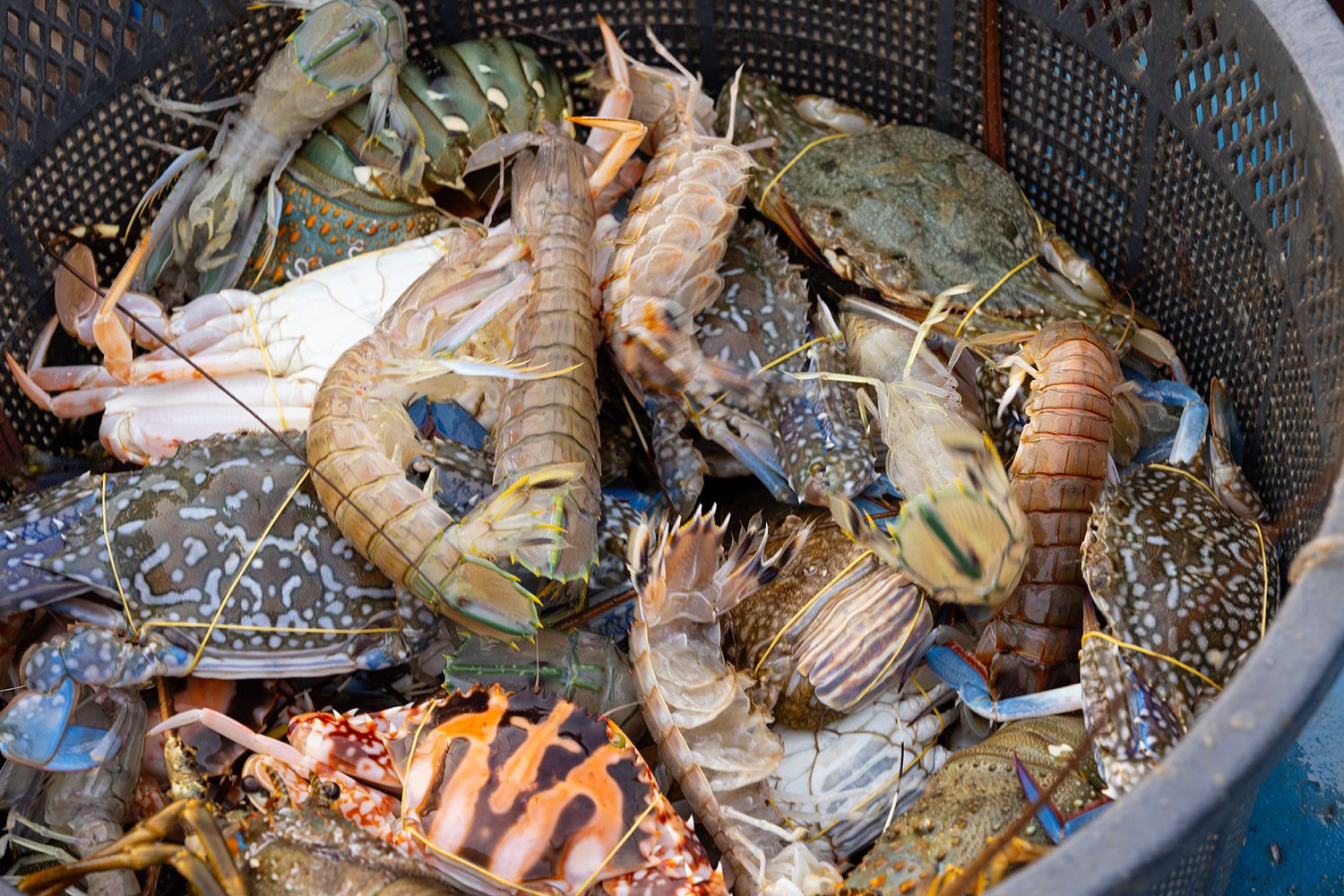
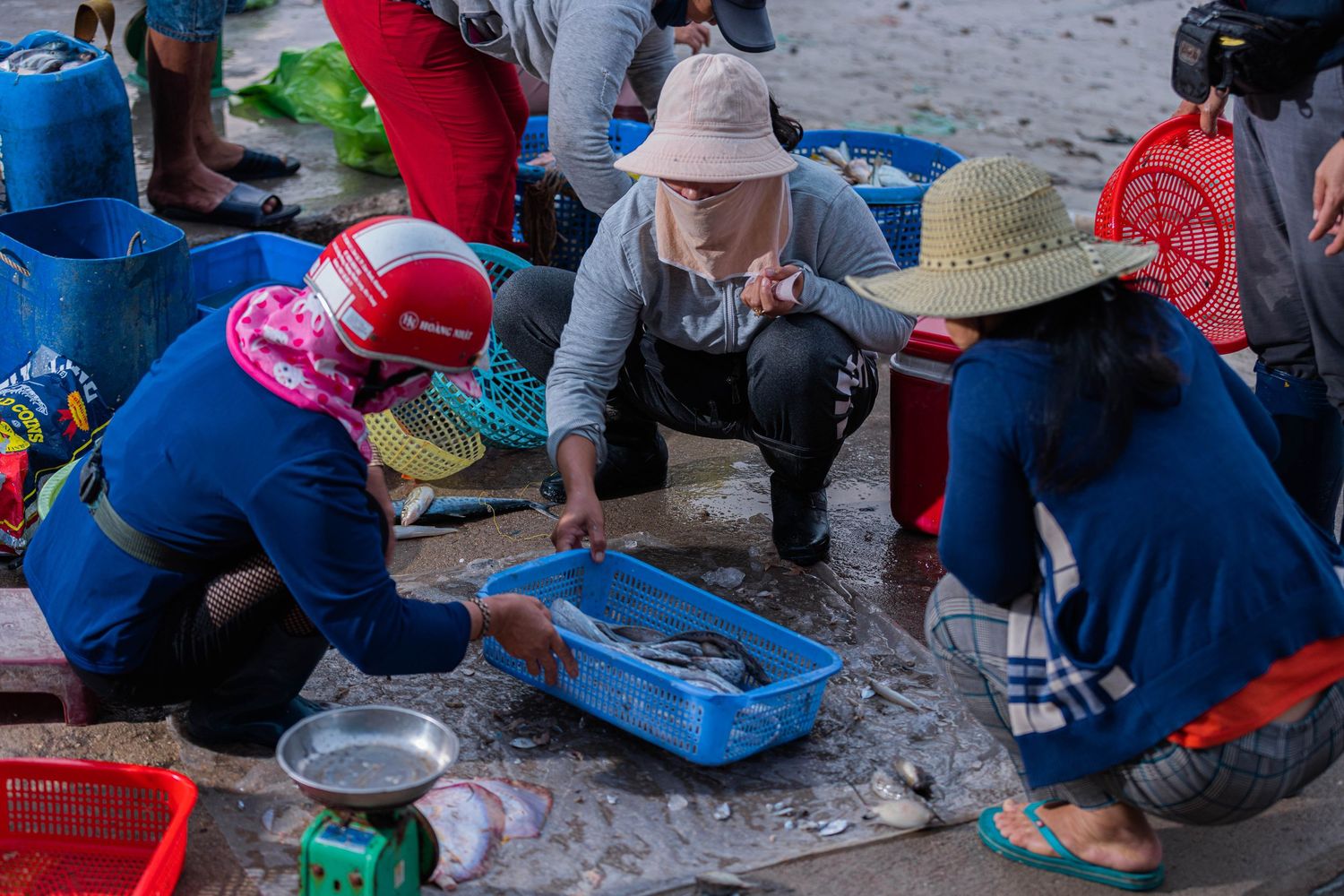
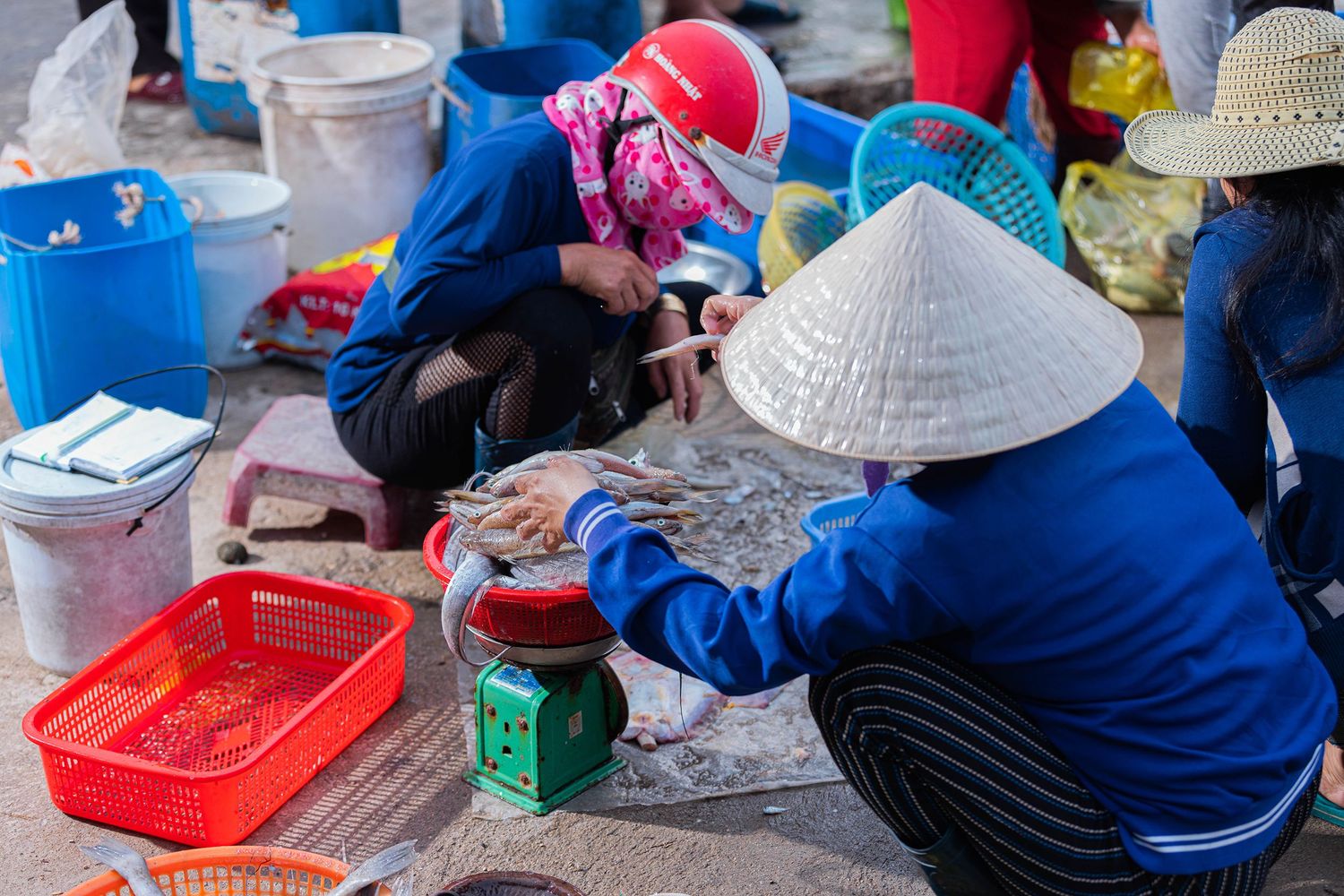
I tossed around the borrowed futon. Itching atop an old synthetic mink blanket as I anxiously waited to be escorted to visit the Fish Market. A local family friend met me outside as the crickets began to sing. And we were off on the moped to the seaside before sunrise. While the rest of the world slept in the dark, the fish market was stirring. The smell of salty sea and hints of coffee beans coated the air. The taste of my embarrassment escaped from my mouth as I tried to speak broken Vietnamese to the locals. I pushed through my discomfort with my camera as my armor.
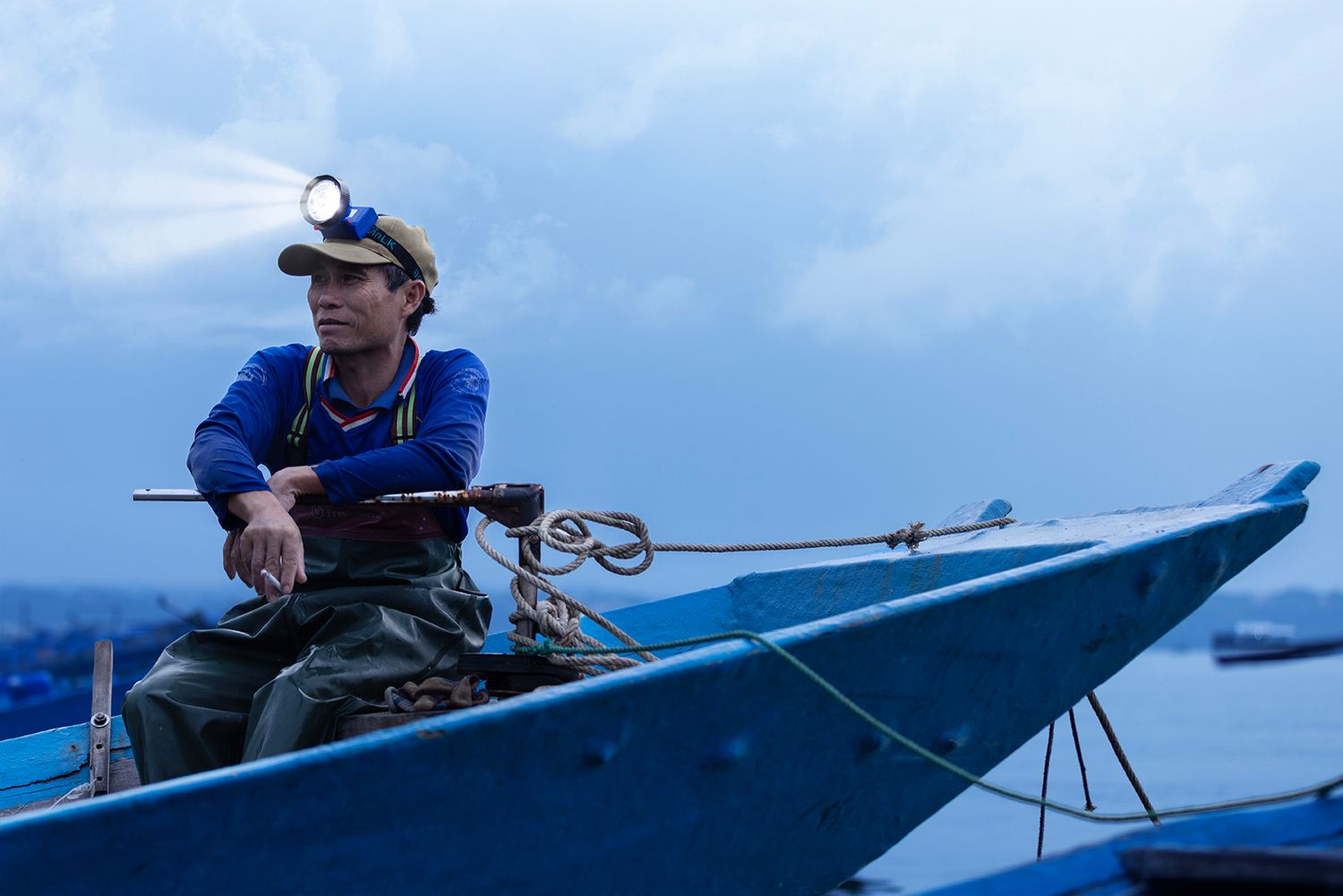
Some boats had been out for days for a decent catch. People fished with household baskets and noodle sieves. Women shouted the market price from their squat where people would weigh and cash in their catch. As the sun slowly crept up to wake up the rest of the world, this one seemed to slowly blink its eyes shut for a rest until tomorrow. In less than an hour, it was over. Almost as if I'd dreamed it.
two things can be true
in a zero-sum game
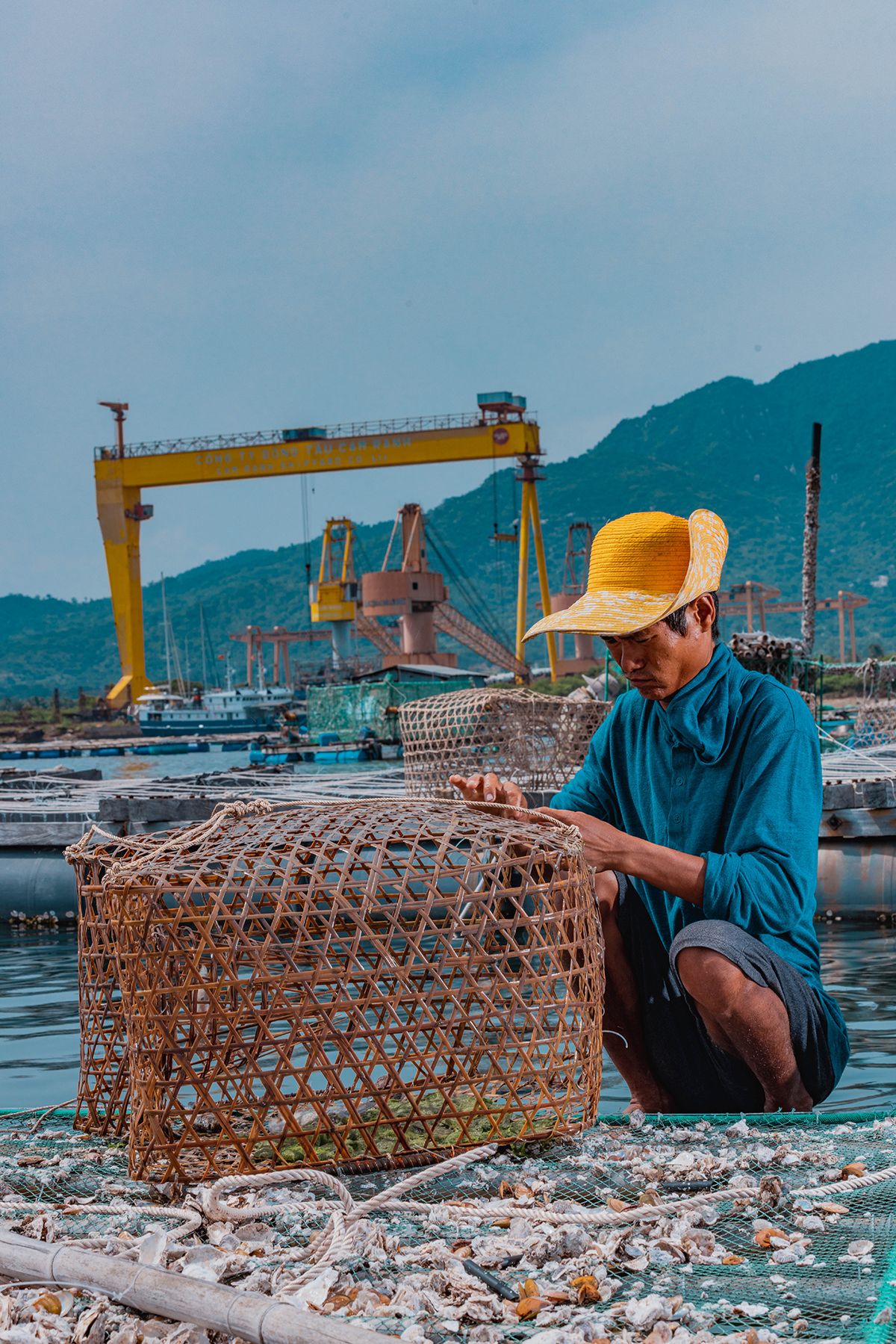
Oil is drilled behind a fisherman who collects his catch from a bamboo fish trap.
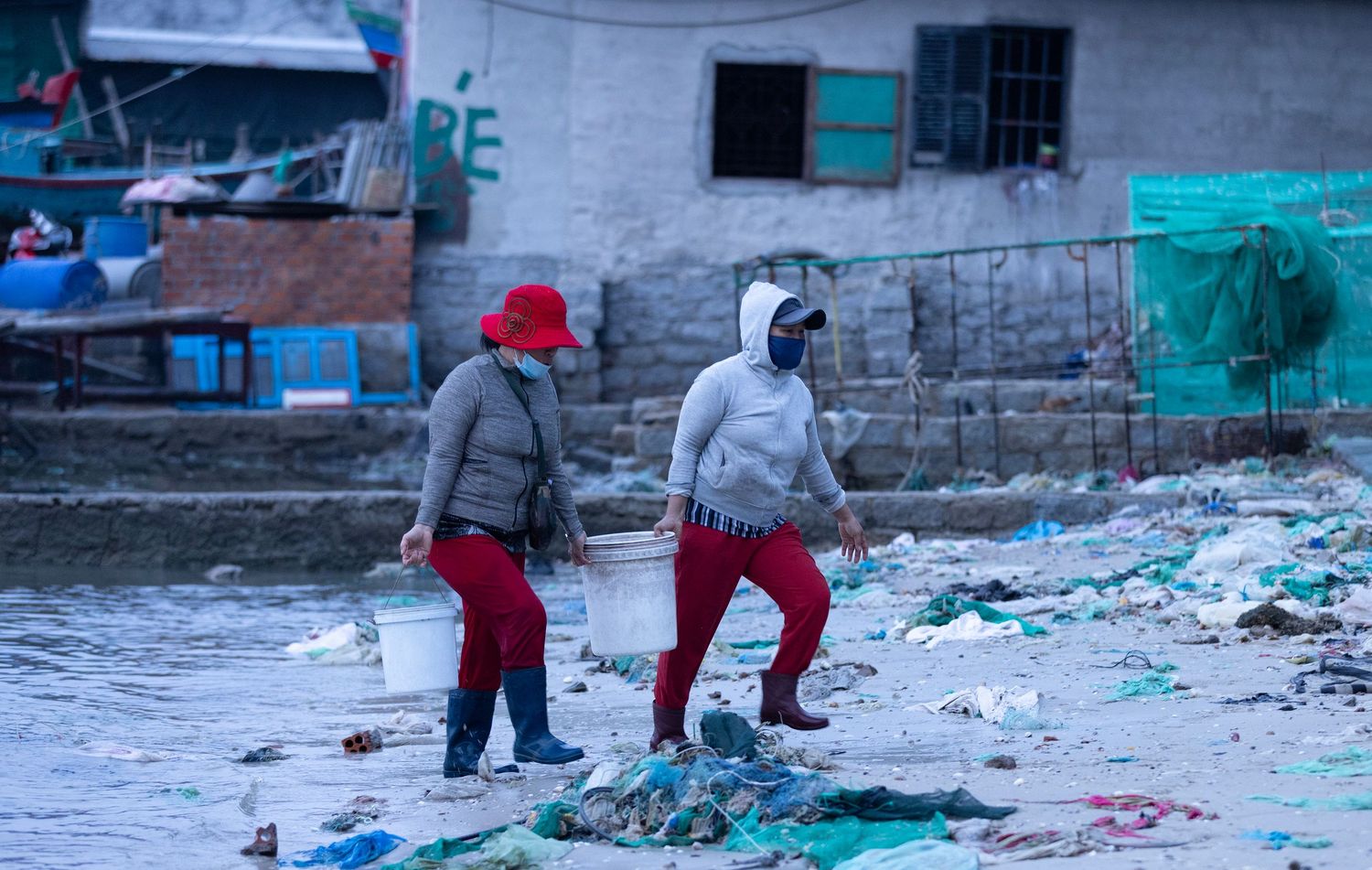
This is a beautiful place, surrounded by sandy beaches, ocean, and an abundance of marine life. It is also a place that has been neglected and taken for granted, and that reality is difficult to reconcile.
That attitude does not exist in isolation.
The problem is not simply individual behavior. It is also a lack of infrastructure, resources, and collective responsibility. That context helps explain how indifference becomes normalized, without diminishing anyone’s responsibility for their own actions.